🌍 Global Participation
The 2025 conference witnessed participation from 40+ countries, representing top universities, hospitals, research institutes, and medical organizations. With a strong international presence, the event fostered rich cross-cultural dialogue and multi-disciplinary collaboration.
Past Conference Report- 2025

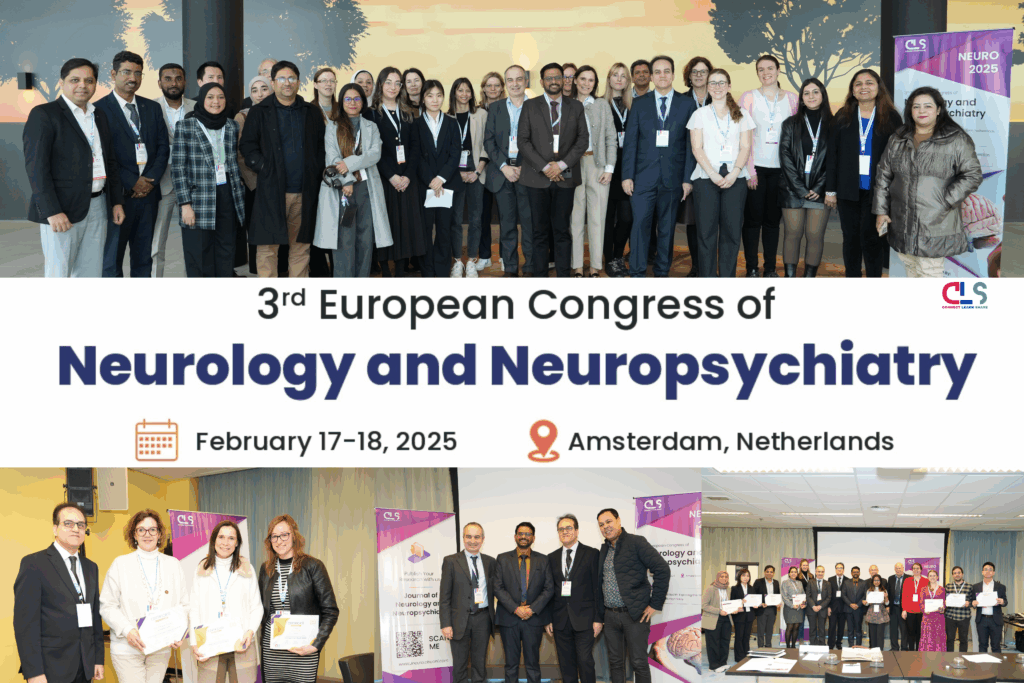
3rd European Congress of Neurology and Neuropsychiatry –
Conference Report February 17-18, 2025, Amsterdam, Netherlands
Day 1 Highlights – February 17, 2025
Venue: Park Plaza Amsterdam Airport, Amsterdam, Netherlands
Theme: Brain and Mental Health: Exploring the Intersection of Neurology and Psychiatry
Website: www.neurologyconf.com
The 3rd European Congress of Neurology and Neuropsychiatry (Neuro 2025), held in the scenic city of Amsterdam, Netherlands, emerged as a monumental event in the field of neuroscience. Organized by CLS Event and Publication Pvt. Ltd., this international congress convened a distinguished array of neurologists, neuropsychiatrists, neurosurgeons, neuroscientists, and allied healthcare professionals, all converging under a unifying theme: “Brain and Mental Health: Exploring the Intersection of Neurology and Psychiatry.”
This two-day scientific extravaganza served as a fertile platform for cross-disciplinary exchange, innovation, and collaboration—reflecting the evolving interplay between neurology and mental health. The event upheld its commitment to academic excellence, innovation, and global outreach, attracting participants from over 30 countries.
Opening Ceremony & Keynotes
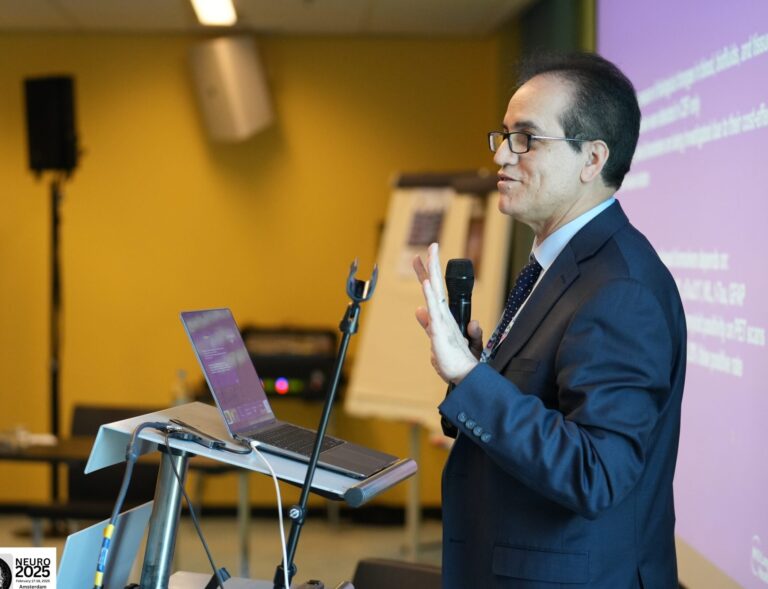
The congress commenced with a warm welcome and opening remarks by Prof. Dr. Allal Boutajangout from the New York University School of Medicine, USA. His insightful presidential address set the tone for the conference, emphasizing the critical need for integrated approaches in understanding neurological and psychiatric comorbidities.
- Mobeena Ghuman (NYU Grossman School of Medicine, USA) presenting promising results from Affibody applications in aged animal models of Alzheimer’s.
- Dr. Dipesh Sonawane (Sun Pharma, India) offered a detailed post-hoc analysis of Pimavanserin in Parkinson’s psychosis.
- Dr. Ashutosh M. Shukla (University of Florida, USA) explored the phenotypic link between Parkinson’s and end-stage kidney disease.
- Dr. Francisco J.L. Caballero (University of Pittsburgh, USA) examined midbrain auditory processing deficits in early psychosis.
- Dr. K. Tugberk Ozdemir (Turkey) on deep brain stimulation.
- Asli Beyza GUL (UK) on digital Parkinson’s care.
- Višnja Bandalo (Croatia) on creative arts therapy for neurological rehabilitation.
- Dr. Allal Boutajangout, affiliated with NYU Langone Health in the United States.
- Dr. Stephen E Nadeau, hailing from the University of Florida, USA
- Dr. Marit Ruitenberg, Leiden University, Netherlands
- Dr. Gary L. Pattee, associated with Bryan Medical Center in the USA
- Dr. Anand Pratap Singh, representing Gautam Buddha University in India
- Dr. Giuseppe Bonavina, Montecatone Rehabilitation Institute, Italy[Additional 6 Keynote Speakers]
- Prof. Dr. Allal Boutajangout (USA)
- Dr. Anand Pratap Singh (India)
- Dr. Giuseppe Bonavina (Italy)
- Mobeena Ghuman (USA)
- Emna Benmansour (Tunisia)
- Dr. Dipesh Sonawane (India)
- Lusi Khairunnisa (Indonesia)
- Ashleigh Patterson (USA)
- Dr. Aparna Wagle Shukla (USA)
- Miss Hanin Salem (UK – Virtual)
- Dr. Hebatalla Saher Hashem (Egypt – Virtual)
- Dr. Giuseppe Bonavina (Italy) discussed HRQoL in chronic migraine from both clinical and anthropological perspectives.
- Dr. Anand Pratap Singh (India) spoke on P300 wave potentials and their diagnostic relevance in neuropsychiatric disorders.
- Dr. Adam Broncel (Poland) presented his research on auricular vagal nerve stimulation for mild cognitive impairment.
- Fatima Al-Bakri (UK) analyzed APOE polymorphisms in ischemic stroke.
- Prof. Gehan A-R Ahmed (Egypt) presented on beta-amyloid aggregation and clearance using FTIR spectroscopy.
- Dr. Shaw Keith Lau (UK) discussed carotid dissection cases manifesting as sudden-onset dysphagia.
- Dr. Gayatri Kumar (India) demonstrated emotion detection in schizophrenia using affective computing.
- John F. Decarlo (USA) and Emna Benmansour (Tunisia) presented research on epigenetic effects and neurobehavioral toxicity in neuropsychiatric contexts.
- AI in migraine management.
- EEG analysis for anxiety and eating disorders.
- Stroke risk in inflammatory bowel disease.
- Neurological side effects of medications.
- Post-COVID neuropsychiatric manifestations.
- Gender-based olfactory receptor studies in hypertension.
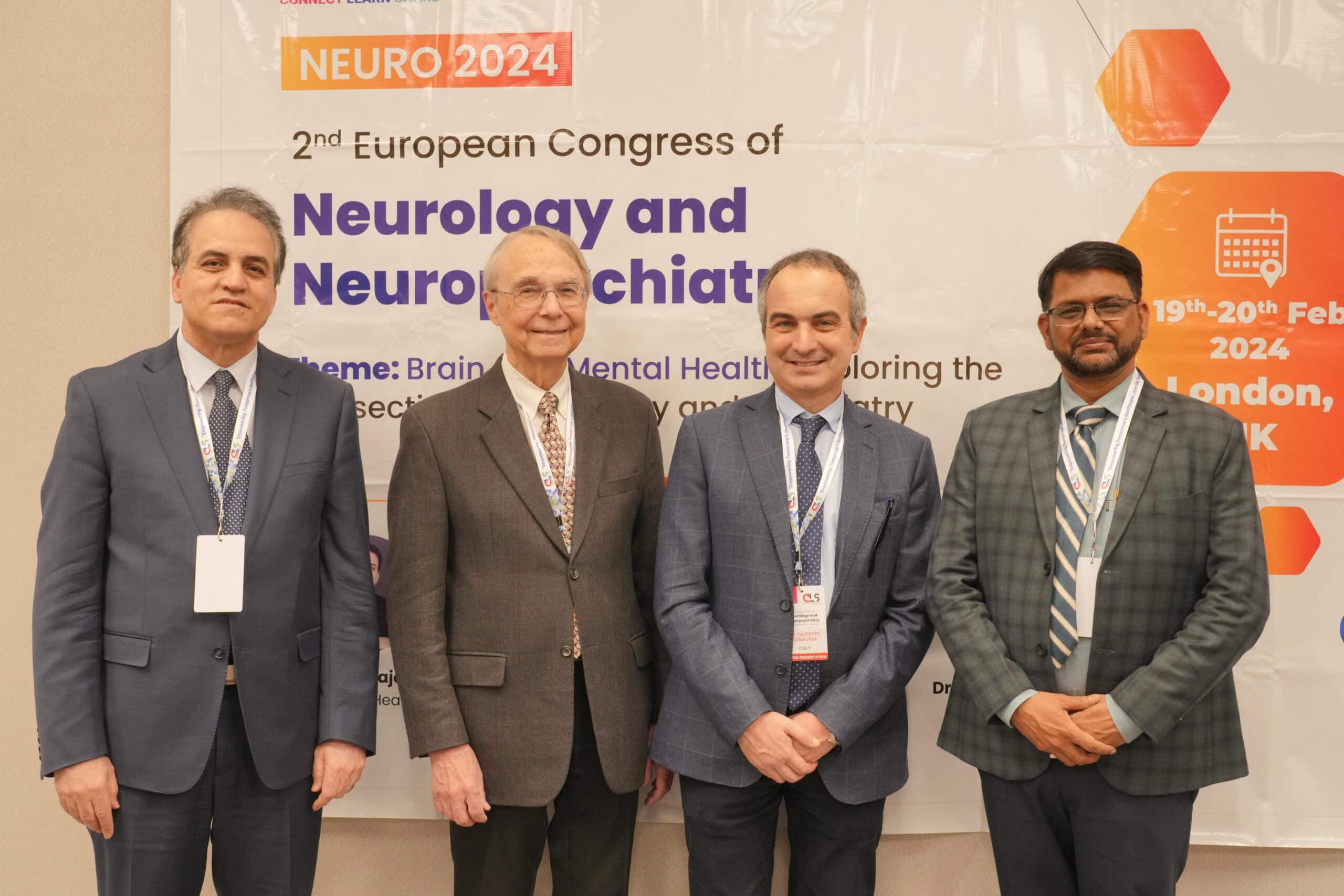
Past Conference Report- 2024


2nd European Congress of Neurology and Neuropsychiatry – Conference Report
February 19-20, 2024, London, UK
Day 1: February 19, 2024
The 2nd European Congress of Neurology and Neuropsychiatry commenced with enthusiasm and scholarly discussions at the heart of London, UK. The event brought together renowned neurologists, neuropsychiatrists, and researchers from diverse corners of the world.
The conference kicked off at 09:30 with a warm welcome by Dr. Allal Boutajangout from NYU Langone Health, USA. His opening remarks set the tone for the scientific feast that followed. The first keynote presentation, “Neural Population Computing Part 1,” unfolded the basic principles of population dynamics and cognitive function, presented by Dr. Stephen E. Nadeau from the University of Florida, USA.
The morning continued with an intriguing exploration of plasma biomarkers in Alzheimer’s disease and COVID-19 subjects, eloquently discussed by Dr. Allal Boutajangout. The networking session before lunch provided an excellent opportunity for attendees to connect and share insights.
Post-lunch, Prof. Anand Pratap Singh from Gautam Buddha University, India, captivated the audience with his talk on “Exploring Psychopathology with Brain Fingerprinting Technique (BFT): A Paradigm Shift in Psychiatry.” The session continued with Dr. Gary Pattee from the University of Nebraska Medical Center, USA, delving into the intriguing question, “Is ALS Onset Accelerated by Chloroviruses and Delayed by Antiviral Immune Responses?”
The afternoon session unfolded diverse topics in the realm of neurology and neuropsychiatry, covering a rare case of pituitary dysfunction with Moyamoya disease, investigating molecular markers in treatment-resistant depression, and exploring the effectiveness of computer-assisted cognitive retraining among patients with mild cognitive impairment.
The day concluded with a series of impactful poster presentations, highlighting research on cognitive flexibility in experimental animals, depression and neuroplasticity, and unique case reports like late-onset Guillain Barré syndrome post-SARS-CoV-2 infection and acute psychosis with isotretinoin initiation.
The Q/A session provided a platform for engaging discussions, and the day culminated in an award ceremony, recognizing the contributions of speakers, delegates, and researchers.


Past Conference Report- 2023


- American Academy of Neurology (AAN)
- European Academy of Neurology (EAN)
- World Federation of Neurology (WFN)
- American Neurological Association (ANA)
- International Parkinson and Movement Disorder Society (MDS)
- European Federation of Neurological Societies (EFNS)
- Child Neurology Society (CNS)
- Neurocritical Care Society (NCS)
- Society for Neuroscience (SFN)
- American Epilepsy Society (AES)
- European Society of Neurosonology and Cerebral Hemodynamics (ESNCH)
- Asian-Oceanian Association of Neurology (AOAN)
- Canadian Neurological Sciences Federation (CNSF)
- Neurology Section of the Royal Society of Medicine (RSM)
- Movement Disorders Society (MDS)
- Peripheral Nerve Society (PNS)
- Society for Neuro-Oncology (SNO)
- European Stroke Organisation (ESO)
- American Headache Society (AHS)
- Neurology India Society
